
Choosing home equipment for 2024 means mastering criteria that go far beyond design or the displayed price. The reparability index, energy efficiency, and the rise of refurbished products are reshaping the evaluation grids. Here, we detail the technical points to check before any purchase.
Reparability Index and Refurbished: Criteria Ignored by Traditional Guides
The reparability index, which has been generalized since 2021 for washing machines, vacuum cleaners, and lawn mowers, has expanded to new categories of equipment in 2023-2024. This score, displayed on a scale of 1 to 10, evaluates the availability of spare parts, ease of disassembly, and the repair cost relative to the new price. An index higher than 7 guarantees sustainable access to spare parts and reduces the risk of planned obsolescence.
Major retail brands have opened dedicated sections for refurbished large appliances, kitchen robots, and vacuum cleaners. This segment is growing strongly, driven by ADEME’s reports on the circular economy of electrical and electronic equipment. We recommend systematically cross-referencing the reparability index with the manufacturer’s warranty: a well-rated device but guaranteed for only one year raises questions.
To delve deeper into these selection criteria, we have listed the main guides on home equipment on Habitat Guides, which rank products according to their actual durability and maintainability.
Energy Efficiency in the Kitchen and Bathroom: Sizing Before Buying
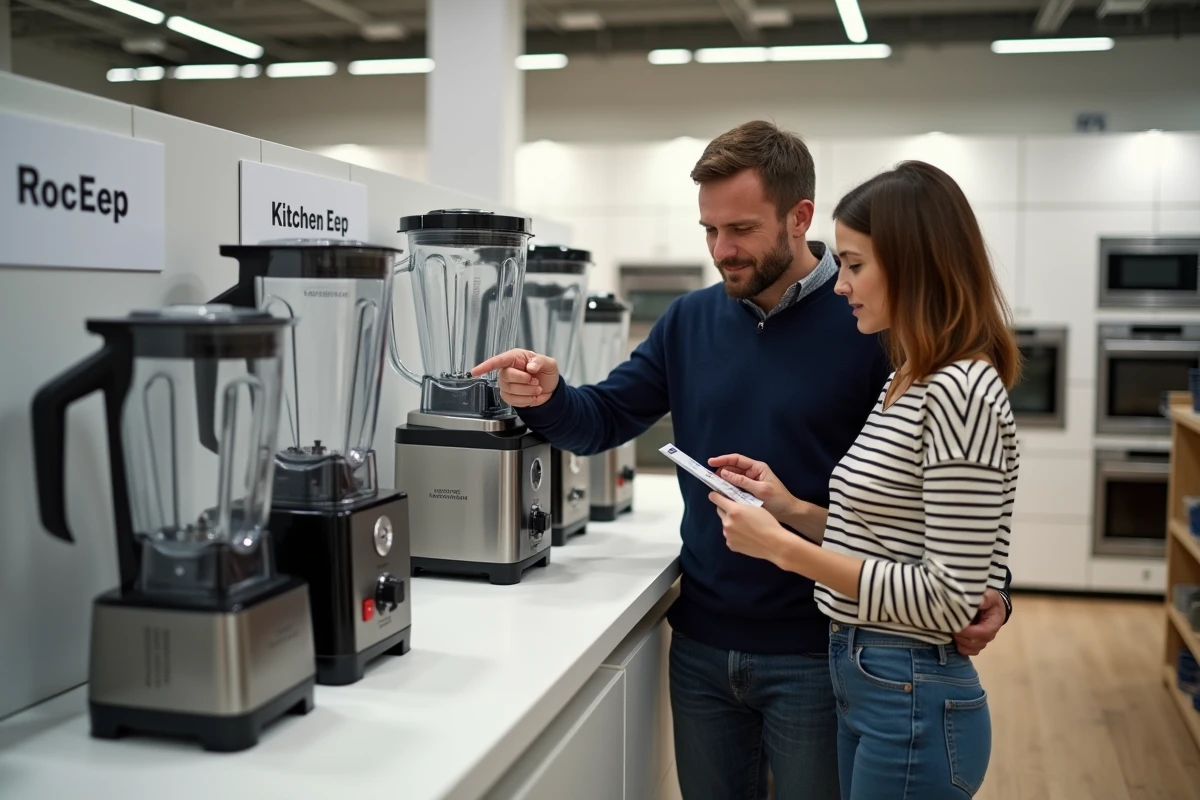
Public organizations, led by ADEME, have integrated energy efficiency as the first level of recommendation, even before choosing a high-performance appliance. In the kitchen, this means prioritizing induction hobs (direct heat transfer, no loss) and sizing the oven according to the actual number of servings rather than automatically choosing a 70-liter model.
In the bathroom, the reasoning is the same. Before investing in a thermodynamic water heater, we check the actual volume of hot water consumed. An oversized tank unnecessarily keeps water at temperature, negating the benefits of the A+ energy class.
Heating and Air Conditioning: The Hierarchy of Passive Solutions
ADEME recommends exhausting passive solutions (solar protections, greening, ceiling fans) before considering air conditioning. When purchasing becomes necessary, the sizing per square meter of living space determines actual performance. An appliance that is too powerful for the room performs short cycles, consumes more, and wears out faster.
- External solar protections (awnings, bioclimatic pergolas): reduce indoor temperature by several degrees without electrical consumption.
- Ceiling fans: their consumption remains marginal compared to an air conditioner, and they are sufficient in most configurations.
- A reversible air conditioner of class A+++: to be reserved for rooms facing south without shading options, with sizing by a certified professional.
Electricity and Safety: What the NF C 15-100 Standard Requires in Renovation
Any replacement of equipment in a kitchen or bathroom affects the electrical network, and the NF C 15-100 standard applies fully as soon as one intervenes on a circuit. We observe that many renovation projects underestimate this point: installing a new built-in oven or a jet shower often requires a dedicated circuit with appropriate differential protection.

Each large cooking appliance requires a separate circuit with a 6 mm² section, protected by a 32 A circuit breaker. A bathroom imposes electrical safety volumes (zones 0, 1, 2) that determine where to place outlets, lighting, and heating equipment. Ignoring these constraints exposes one to a compliance refusal from Consuel and, above all, to a risk of electrocution.
Points to Check Before Purchasing Energy-Consuming Equipment
- Check the maximum admissible power of the existing electrical panel: an excessive load accumulation causes recurrent tripping.
- Inspect the section of the existing cables: an undersized cable heats up and poses a fire risk, even with a correctly calibrated circuit breaker.
- Ensure that grounding is effective on each affected circuit, especially in homes built before the 1990s.
Shower, Bathtub, and Faucets: Balancing Comfort and Water Consumption
The choice between a shower and a bathtub is not just a matter of space. A ten-minute shower with a standard showerhead consumes as much as a bath. Flow-restricted showerheads, calibrated between 6 and 8 liters per minute, divide this consumption without altering perceived comfort, provided that sufficient network pressure is maintained.
On the faucet side, thermostatic mixers stabilize the temperature in seconds, eliminating the manual adjustment phase during which water flows without being used. For a complete bathroom, we recommend pairing a thermostatic mixer with a low-flow showerhead: this is the most effective combination in terms of efficiency.
Bathroom furniture follows the same sizing logic. A sink cabinet that is too deep for a narrow space forces uncomfortable postures daily. Measuring the available floor space and the height under the mirror before any order avoids costly returns and adaptations.
The choice of home equipment relies on precise technical trade-offs, not on fleeting aesthetic trends. Reparability, energy sizing, and electrical compliance form the foundation of a sustainable investment. Checking these three points before each purchase protects both the budget and the safety of the home.