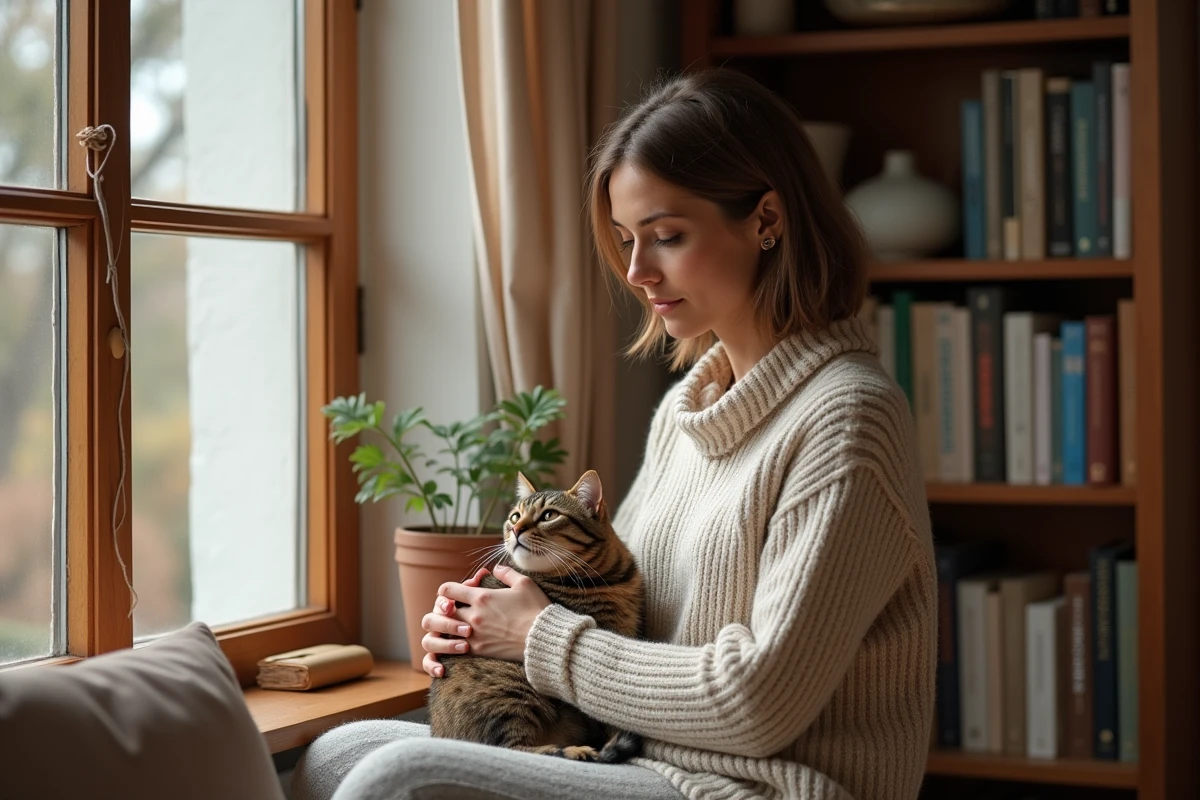
In medieval Europe, the sudden appearance of a cat in a house was sometimes interpreted as an omen, either of luck or misfortune, depending on the color of the animal or the season. Some African traditions attribute a messenger function to these visits, bridging the visible and invisible worlds.
In several cultures, the arrival of a cat is neither random nor a simple case of animal wandering. Persistent beliefs ascribe singular meanings to these arrivals, surpassing rational explanation. These interpretations transcend time and continue to influence the perception of these unexpected visitors.
When a cat visits your home: mere coincidence or a sign to decipher?
Seeing an unknown cat cross the threshold, linger, or observe with a piercing gaze is never trivial. Tradition assigns a strong symbolic charge to these passing felines. Their attitude, discretion, and sensitivity to atmospheres invite us to look beyond appearances. A cat that makes itself comfortable, settles in, or shows multiple signs of interest raises questions about the deeper meaning of its visit.
A threshold animal, the cat sometimes acts as an invisible revealer. For some, its presence indicates that it is time to strengthen protections, to guard against undesirable influences. Others perceive it as a silent invitation to look within, to listen more finely to what is happening inside. The arrival of this visitor can sometimes disrupt the balance of the home, leaving a subtle message that does not reveal itself immediately.
Some feline behaviors particularly attract attention; here’s what different traditions say about them:
- A cat positioned near an entrance or window for an extended period would be a sign of protective vigilance, an energetic filter resistant to external disturbances.
- A cat that rubs its head against furniture or inhabitants does not act solely out of affection: it participates in an exchange, a circulation of beneficial energy.
The spiritual significance of the cat according to Boule de Poil offers rich insights into these phenomena, blending ancient symbols with lived experiences. Between vigilance, protection, and the development of inner listening, the presence of a visiting cat encourages a fresh perspective on daily life, without ever seeking to explain everything at all costs.
Cats through the ages: symbols, beliefs, and spiritual traditions
The cat has never left anyone indifferent. Since antiquity, it intrigues, inspires, fascinates, and sometimes worries. In ancient Egypt, it holds a special place: a sacred animal, it serves as a bridge between the visible and the invisible. Bastet, the goddess with a feline face, watches over fertility and gentleness, protects the home, and brings luck. Welcoming a cat meant surrounding oneself with kindness and a breath of prosperity.
Over time, the symbolism of the cat has enriched and nuanced. In Europe, medieval centuries sometimes associate it with witchcraft, but rural France also makes it an ally, a guardian of the home in many tales. In Islamic tradition, the cat enjoys particular respect: its gentleness and cleanliness make it a cherished companion.
Beyond the West, other cultures offer different interpretations. The Japanese maneki-neko, this cat that raises its paw at the entrance of shops, brings luck and attracts success. The figure of the totem cat, crossing generations, embodies intuition, vigilance, and the ability to perceive the invisible. Whether stray or domestic, the cat carries a symbolic memory that transcends borders and eras.
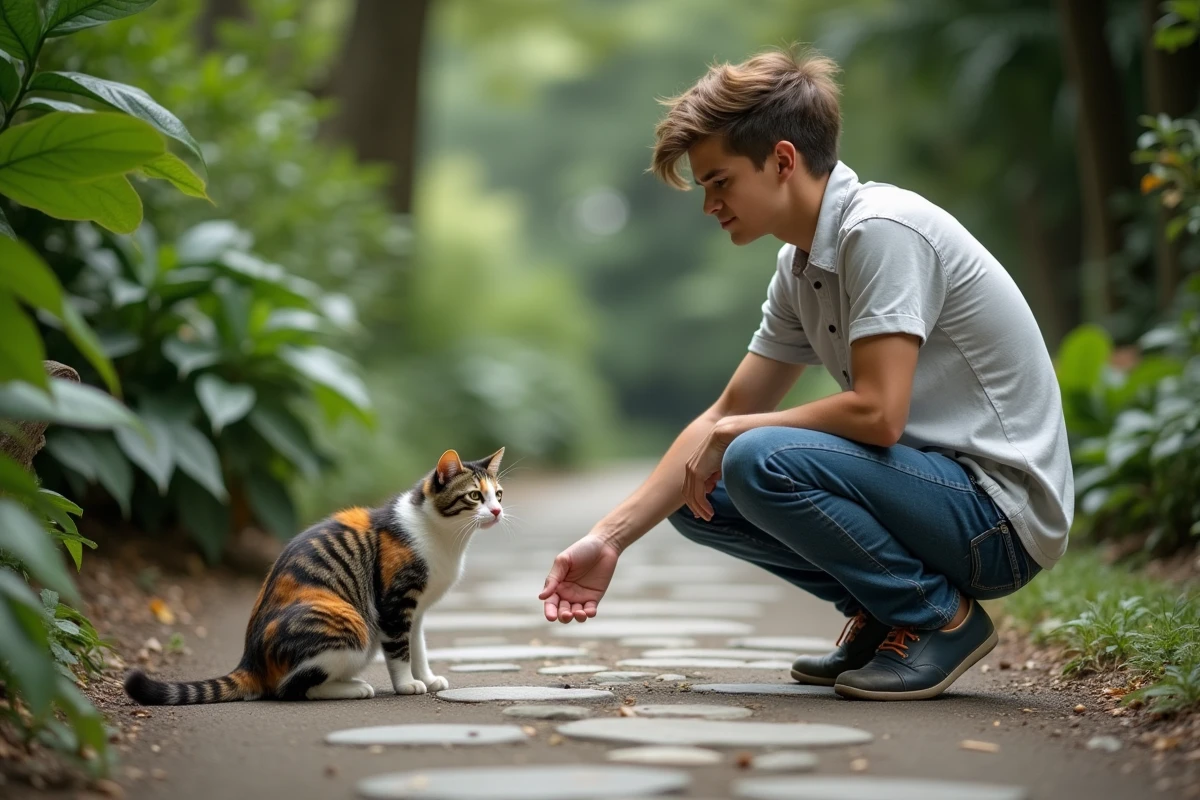
What spiritual messages can a visiting cat convey to you in your daily life?
Seeing an unknown cat settle in front of your door, stretch out in a hallway, or curl up under a window confronts you with a form of discreet message. The animal’s passage resonates as an invitation to pause, to observe what circulates in the house, to pay attention to the quality of energies. Sometimes, this cat imposes itself as a silent sentinel, watching over the balance of the place and its inhabitants.
The color of the fur is not insignificant in many traditions. The black cat, far from negative superstitions, is often associated with the ability to dispel heavy influences, to protect against what could disturb serenity. The white cat, on the other hand, evokes calmness, gentleness, a presence that invites inner peace. Whether distant in attitude or actively seeking contact, each behavior sheds light on the guiding role that the animal can assume.
Here are some common behaviors and their interpretations in different cultures:
- An extremely composed cat that lingers and settles in would reflect a stable and balanced atmosphere, a climate of trust.
- A nervous or wary cat draws attention to latent tensions, imbalances that need to be addressed.
- A cat that chooses to sleep at your place, even for one night, expresses a desire to protect the space, to purify it, or to mark a transition.
Observing a visiting cat is to accept opening up to a form of silent dialogue with the invisible. Their passage, discreet or manifest, sometimes sows a question, a doubt, a call to listen more closely to what circulates around oneself. And what if, ultimately, these visitors were there to awaken a part of vigilance and presence to oneself, often buried under the tumult of ordinary days?