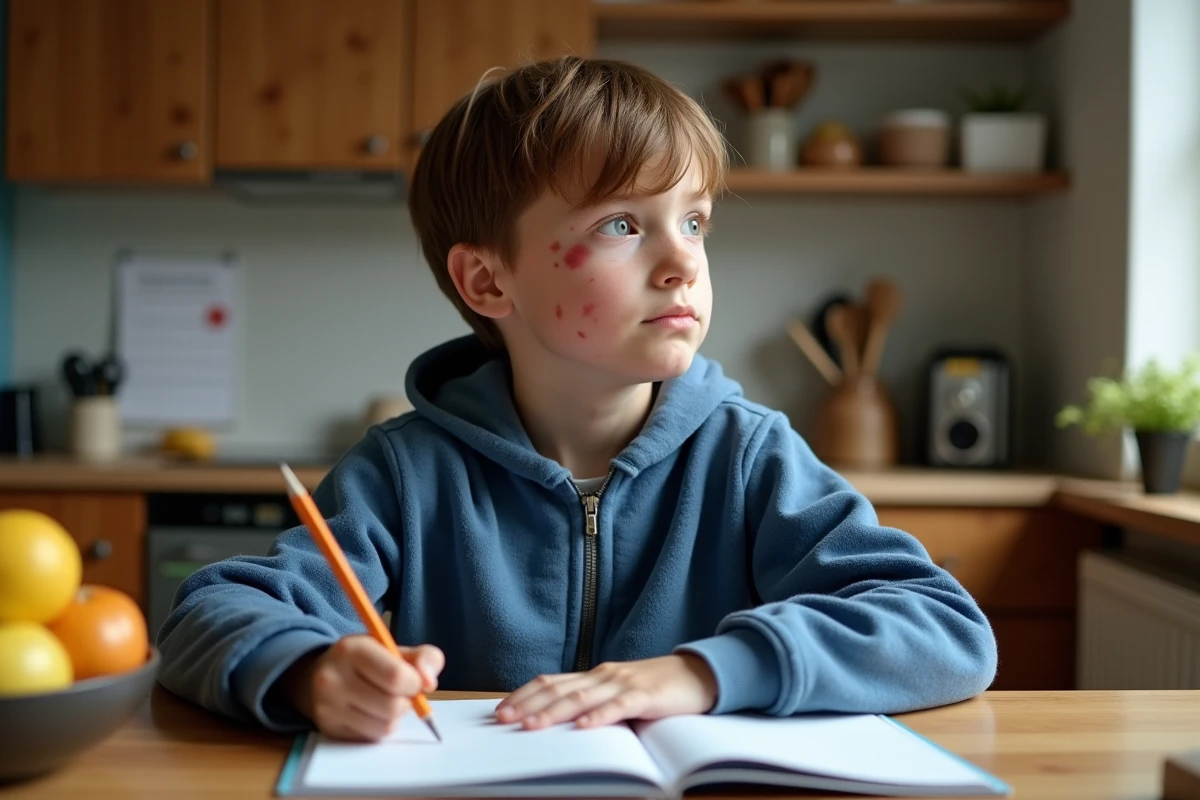
A sick child, a ready backpack, but a pressing question: when does returning to class become reasonable after chickenpox? Protocols clash, practices diverge, and parents often find themselves at the heart of a health puzzle. However, the balance between collective protection and educational continuity allows for no approximation.
Chickenpox in children: understanding the risks of contagion in groups
Chickenpox, triggered by the varicella-zoster virus (VZV), quickly makes its presence felt where children gather. Daycares, preschools, or playrooms: it only takes one nearly invisible carrier for an outbreak to begin. During the incubation period, which lasts from ten to twenty-one days, the child can already be contagious, sometimes even before the first appearance of the characteristic vesicles.
But once the spots have turned into scabs, contamination remains possible. There is only respite when all lesions are completely dry and detached. The risk, it must be said, extends longer than many imagine.
There are three main ways to contract chickenpox in a group setting:
- By inhaling micro-droplets during a sneeze or cough;
- By directly touching the lesions of an infected child;
- Through contaminated objects (clothing, toys) and, more rarely, by transmission from mother to child during pregnancy.
A chickenpox outbreak, usually mild in children, can, however, become a serious issue for adults, pregnant women, infants, or individuals with weakened immune systems, as respiratory complications, skin superinfections, or even neurological issues cannot be ruled out.
It is therefore difficult to make a decision without conflict regarding chickenpox and returning to school: equipping families with reliable information remains the best weapon to ease tensions with educational staff. Quickly identifying fever, itching, fatigue, and the first spots helps prevent spread, but group solidarity remains the best defense.
When can the child return to school or the childminder?
The decision is not merely a matter of timing. As soon as the diagnosis is confirmed, a period of exclusion is imposed on the child. Parents must keep in mind that the contagious phase begins two days before the spots appear and continues until all scabs have disappeared. It is impossible to hasten the return as long as the skin shows any signs of the illness; the virus would still be transmitted easily.
Some concrete criteria help determine the timing of the return:
- The exclusion period will depend on the speed of healing: usually about a week, but this can vary if the lesions are numerous or if the child has a more fragile health.
- A return should not be accompanied by fever, fresh rashes, or a tired child: vigilance is necessary to protect the community.
Unambiguous recommendation: return is only possible when all scabs have fallen off. The attending physician, depending on the child’s condition, can validate this final step to particularly protect at-risk profiles. Why such rigor? Because there is no shortcut to effectively protect babies, pregnant women, or anyone who is immunocompromised.
Temporary isolation, often poorly received, remains a cornerstone of epidemic control. Preventing an individual absence from becoming a collective disaster is not an excess of caution; it is a guarantee for the entire group. A child who has overcome chickenpox is then immune for life, and school life resumes its rhythm under better conditions for everyone.
Precautions and essential actions to protect other children on a daily basis
Limiting risks in a group setting is not trivial. The following habits form an effective barrier against the spread of the virus:
- Regularly trim children’s nails to limit scratching, prevent infections, and stop the spread of the virus.
- Do not share personal items: glasses, utensils, comfort objects, or toys should remain individual for all children.
- Prioritize frequent ventilation: allowing air to circulate several times a day helps reduce the ambient viral load.
Direct contact with the spots remains the primary route of contamination, especially for unprotected individuals. Keeping recovering children away from vulnerable people protects the most fragile, such as infants, pregnant women, and immunocompromised individuals. In France, the chickenpox vaccine is administered only in specific cases, for at-risk children or in particular family contexts.
Regarding treatment, paracetamol is recommended to reduce fever. Antihistamines relieve itching. Aspirin and ibuprofen, however, are prohibited, as they can cause rare but severe complications. In case of persistent symptoms, worsening, or unusual disturbances (drowsiness, neck stiffness…), it is imperative to consult a healthcare professional promptly.
Act quickly, watch over others, reinforce simple actions: in the face of chickenpox, there is no shortcut. The return of calm to the schoolyard is decided on this condition, so that the laughter of children is no longer caught up by the invisible gallop of the virus.