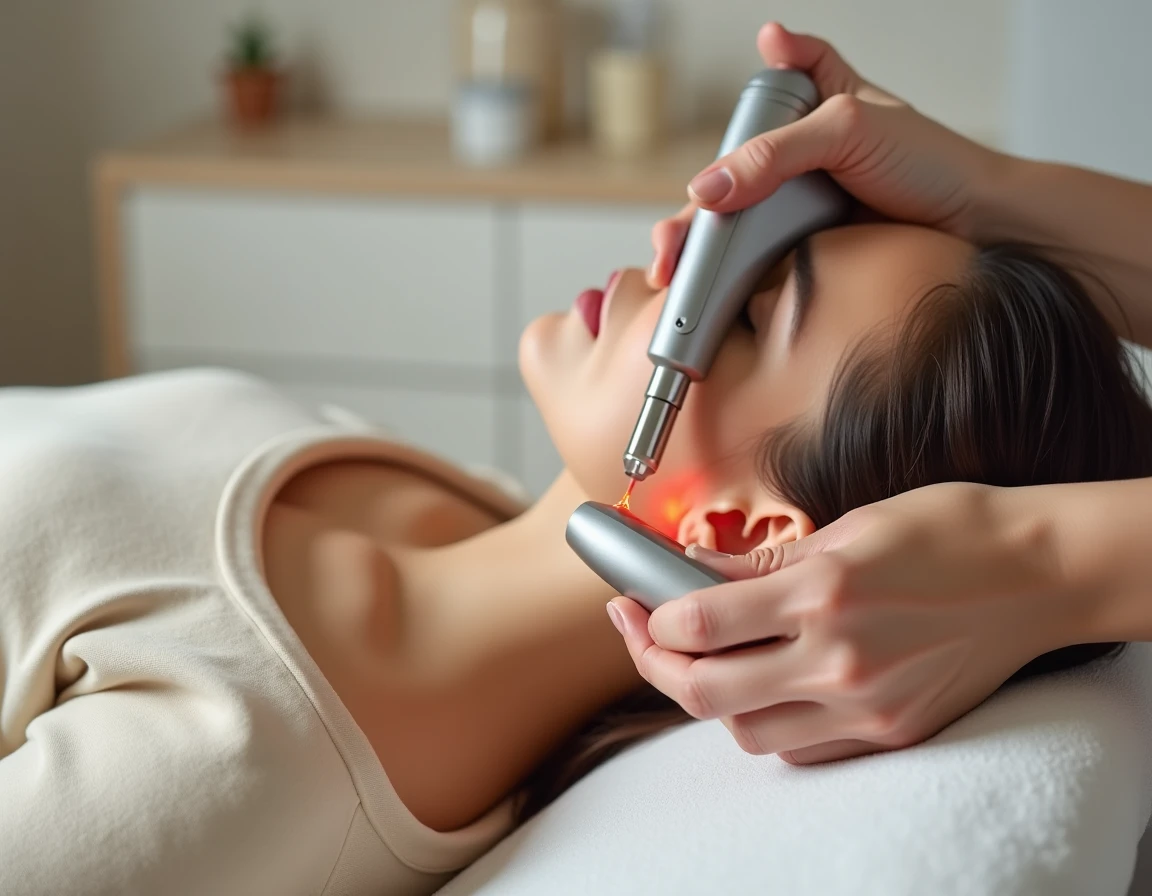
The anti-addiction laser is based on the stimulation of reflex points located on the outer ear, according to the principles of auricular reflexology. The MC77 method, developed and protected at the INPI by the MC77 Group, offers a structured protocol around this technique to support smoking cessation, dependence on alcohol, cannabis, or sugar. Becoming a specialist in this field requires mastering both the technical gesture, the regulatory framework, and the limits of practice.
Photobiomodulation Laser and Auricular Reflexology: The Technical Foundation
The laser used in the MC77 method is a photobiomodulation laser, a device that emits cold light targeted at specific areas of the auricular pavilion. The principle is based on the stimulation of nerve endings connected to the limbic system, with the aim of reducing withdrawal sensations related to a substance.
This approach is in line with auriculotherapy, a discipline that maps reflex points on the ear. The difference with traditional auriculotherapy using needles lies in the vector used: the laser replaces the needle, making the session non-invasive and painless.
The MC77 training teaches the precise identification of these points according to a protocol specific to the MC77 Group. Learners discover the MC77 method on Dr. Hackney’s website in addition to the official training center materials, allowing for a cross-reference of available educational resources.

Content of the MC77 Training: Withdrawal Protocols and Practical Application
The training is offered in-person at the MC77 Group centers (notably in Paris) and online via their dedicated platform. The program covers several addictions: tobacco, alcohol, cannabis, and food dependencies such as sugar.
Each addiction has a specific withdrawal protocol. The trainer, who designed the method, transmits the sequences of points to stimulate, the power of the laser to apply, and the duration of each session. The training includes practical situations with case studies in the office.
The program also addresses peripheral skills related to the laser gesture:
- Motivational coaching to support the patient before and after the session, working on the behavioral triggers of consumption.
- The basics of nutrition applied to withdrawal, particularly to limit weight gain often associated with quitting smoking.
- Ericksonian hypnosis as a complementary technique to strengthen the patient’s commitment to their withdrawal process.
This multi-technical approach distinguishes the MC77 training from simple gesture learning. The trained practitioner combines laser, coaching, and nutritional support to offer comprehensive care.
MC77 Method and Official Withdrawal Recommendations: What You Need to Know
The Haute Autorité de Santé (HAS) and Santé publique France do not recommend laser as a validated method for smoking cessation. Recognized treatments remain nicotine substitutes, behavioral and cognitive therapies, and varenicline. This lack of official recommendation extends to other addictions (alcohol, sugar, cannabis) for which authorities remind that withdrawal must remain medically supervised.
The lack of solid and reproducible scientific evidence explains this position. The available studies on auricular laser do not meet the methodological criteria required by health agencies to validate a withdrawal technique.
For the practitioner trained in the MC77 method, this regulatory reality has direct consequences on communication. The DGCCRF monitors health claims in the wellness sector outside the medical circuit. Several recent decisions remind that a professional exposes themselves to sanctions if they present unproven success rates or imply that a method is “validated” by health authorities without evidence.
A trained and rigorous specialist therefore positions their practice as a complementary support for withdrawal, without substituting for medical follow-up. This transparency protects both the practitioner and the patient.
Opening an Anti-Addiction Laser Office: Legal Framework and Result Monitoring
Opening an anti-addiction laser office does not require a medical degree, as the practice falls under wellness rather than care. The MC77 training provides a certification that attests to the mastery of the protocol and the use of professional laser equipment (such as the Premio models marketed by the MC77 Group).
The legal framework imposes specific obligations:
- Not to use medical terminology in the office’s communication (no “treatment,” “cure,” or “therapy” in the strict sense).
- To systematically refer any patient presenting psychiatric comorbidities or severe dependence requiring medical follow-up to a doctor.
- To objectively measure results over several months rather than relying on the patient’s immediate feelings, using tools such as nicotine dependence tests or co-oximetry for tobacco.
Post-session follow-up differentiates a serious practitioner from a one-time operator. Professionals in the sector express a growing need for tools to prevent abuses, particularly excessive promises and the care of vulnerable patients without medical support.
The MC77 method offers a structured framework for practicing in the field of anti-addiction laser, with precise protocols and training that covers the gesture, coaching, and nutrition. The practitioner who chooses this path benefits from understanding the limits set by health authorities and building their practice on the rigor of follow-up rather than on promises of guaranteed results. It is this stance that builds lasting credibility with both patients and institutions.