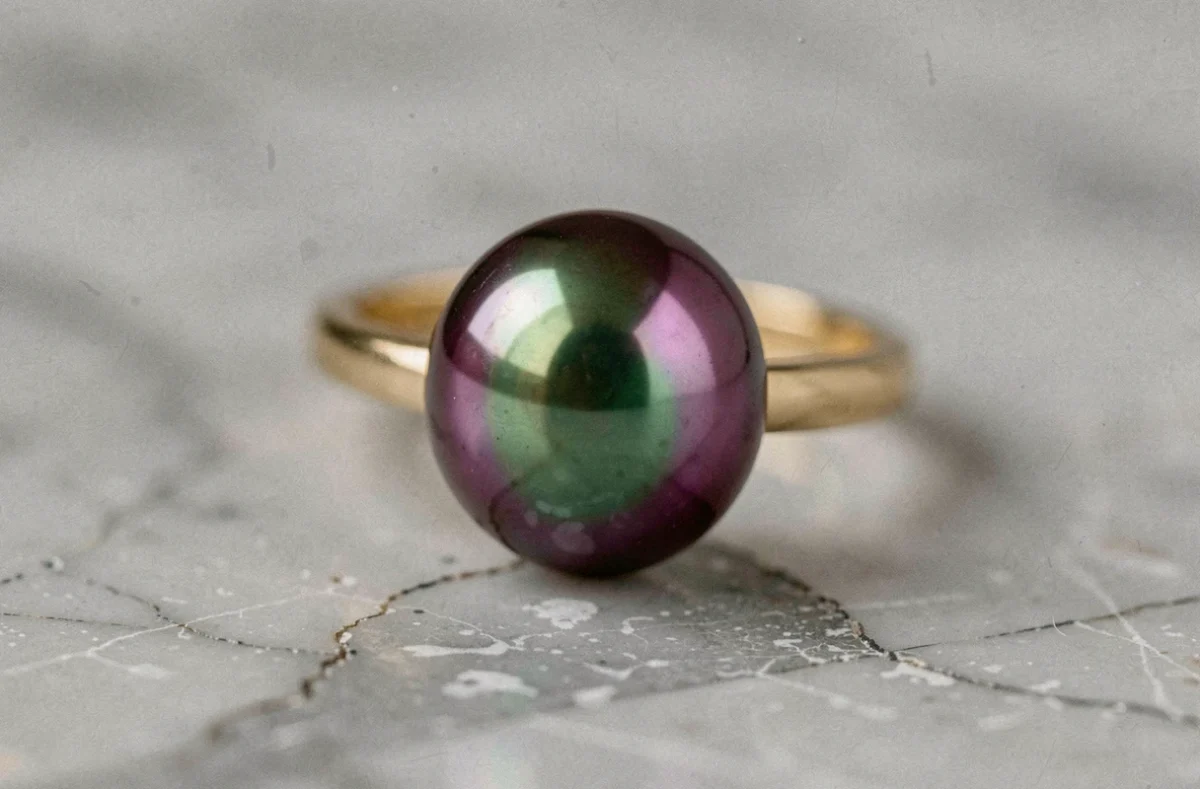
A Tahitian pearl pendant set in 18-karat gold catches the eye, but its price can vary threefold depending on factors few buyers know how to assess. From pearl quality to the setting and the craftsmanship involved, the final budget comes down to very specific choices. Understanding these factors helps you buy a piece of jewellery that will last for decades without losing its lustre or value.
18-karat gold and Tahitian pearls: why the setting makes all the difference
Most guides focus on the pearl itself. Yet the setting deserves just as much attention, because it determines how well the jewellery will hold up to everyday wear.
18-karat gold (750 parts per thousand) offers a good balance between purity and mechanical strength. Pure 24-karat gold would be too soft to hold a pearl securely in a ring or pendant worn every day. The alloy, which contains 75% gold, also includes copper or silver, making the metal harder without compromising its lustre.
In France, the eagle’s head hallmark guarantees 750 gold. Checking for this hallmark before buying is the most reliable way to confirm the metal’s fineness. However, it says nothing about the quality of the setting or the strength of the bail.
For a piece worn regularly, it’s worth asking the jeweller how the pearl is attached (glued, screwed in or claw-set) and whether the setting can be repaired or tightened over time. This often-overlooked detail is part of the true cost of a durable piece of jewellery. Before buying, it’s useful to estimate the price of a Tahitian pearl by taking the metal and setting into account, not just the gemstone.
Tahitian pearl quality criteria: what really determines the price
Have you noticed that two black pearls of the same size can have very different prices? Six criteria account for these differences. Knowing what they are helps you avoid overpaying for an average pearl or undervaluing a beautiful one.
Lustre and surface condition
Lustre is a pearl’s ability to reflect light like a mirror. A pearl with intense lustre appears to glow from within. This has a greater visual impact than size.
Surface condition matters too. Pits, grooves and bumps reduce a pearl’s value. A smooth, even surface across most of the pearl is a sign of well-formed nacre.
Shape, size and nacre thickness
Perfectly round pearls are the rarest, and therefore the most expensive. Baroque (irregular) shapes offer a distinctive look at a more accessible price. A baroque pearl with beautiful lustre can cost from 70 to 90 euros, while a superior-quality round pearl measuring 8–9 mm typically costs between 180 and 220 euros.
Nacre thickness directly affects durability. Thick nacre protects the nucleus and preserves lustre for longer. A pearl with thin nacre may become dull after just a few years of regular wear.
Colour and orient
Tahitian pearls are not strictly black. Their colour palette ranges from silvery grey to peacock green, with aubergine tones in between. Secondary overtones, known as “orient”, add depth. Peacock hues combining green and pink are among the most sought-after.
One thing to bear in mind: AAA grading is not a universal standard. Different sellers may grade the same pearl differently. Rather than relying on a letter grade, ask for specific details about lustre, surface condition and nacre thickness, as well as disclosure of any treatments.
Budget for 18-karat gold Tahitian pearl jewellery: price ranges by piece
The type of jewellery makes a considerable difference to the budget, especially because a necklace requires several pearls matched for size, colour and lustre. This matching process explains the price difference between a pendant (with a single pearl) and a full strand.
| Type of jewellery | Indicative price range | Factors affecting the price |
|---|---|---|
| Pendant | 520 – 2 650 euros | Quality of the single pearl, complexity of the setting |
| Earrings | 589 – 1 945 euros | Matching two identical pearls |
| Ring | 600 – 3 650 euros | Type of setting, pearl size |
| Bracelet | 1 870 – 2 650 euros | Number of pearls, consistency of the strand |
| Necklace | From 798 euros | Number of matched pearls, quality of the thread and knots |
These ranges apply to jewellery set in 18-karat gold with superior-quality pearls. A price that is significantly lower should raise as much concern as one that is unusually high.
A pendant priced between 500 and 1,200 euros is a good starting point for a first durable piece of Tahitian pearl and 18-karat gold jewellery.
Care and durability: the hidden cost of Tahitian pearl jewellery
Buying a beautiful piece isn’t enough. The pearl is the most delicate part of jewellery worn every day. Without proper care, even a high-quality pearl can lose its lustre within a few years.
Here are some practical precautions to factor into your time and money budget:
- Wipe the pearl with a soft cloth after each wear to remove perspiration and cosmetic residue, which can gradually damage the nacre
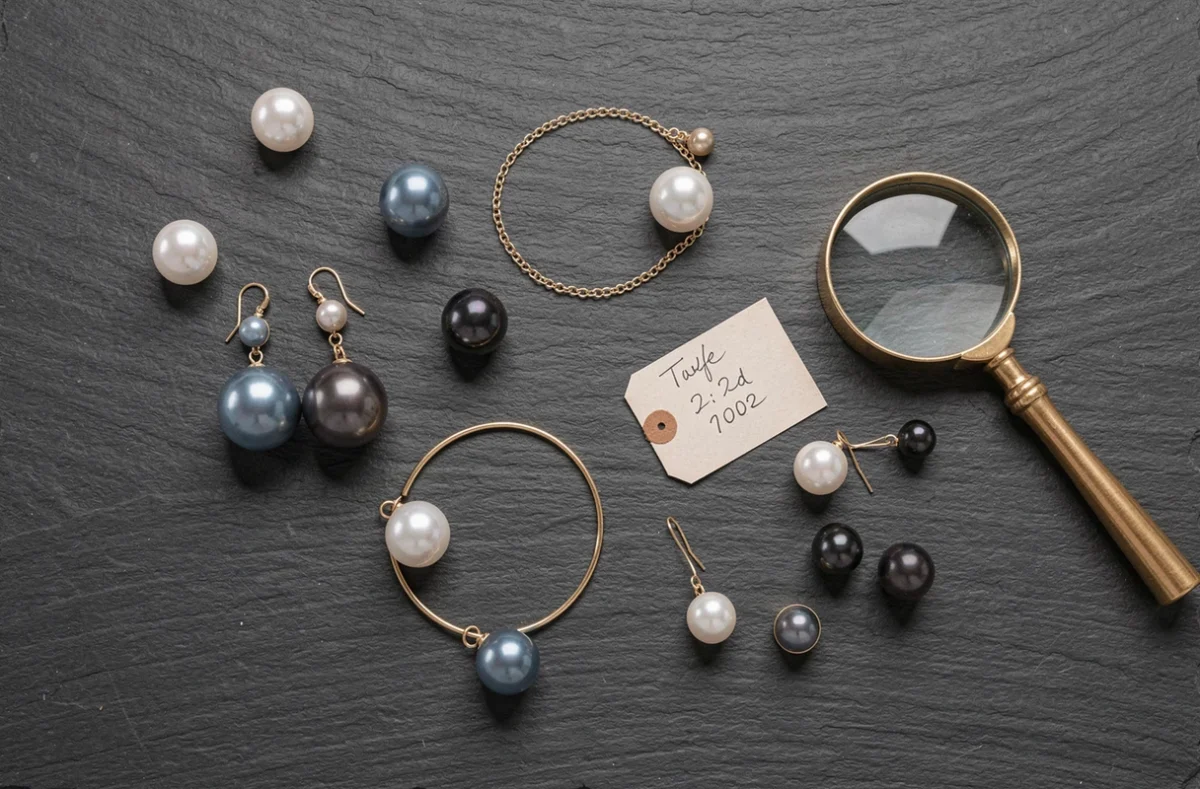
- Store the jewellery separately from other pieces in a soft pouch to prevent scratches on the pearl’s surface
- Never use an ultrasonic cleaner or steam, as these can crack the nacre or loosen the pearl from its setting
- For a necklace, have the knots between the pearls checked every two to three years: they reduce friction and prevent you from losing all the pearls if the thread breaks
Allow for a setting check and possible restringing in your long-term budget. This modest maintenance cost protects a much larger investment.
Choosing Tahitian pearl and 18-karat gold jewellery ultimately comes down to your priorities. A smaller pearl with remarkable lustre and a sturdy setting is a better choice than a large, dull pearl in a fragile setting. The wisest budget is one that gives as much consideration to the quality of the metal and setting as to the gemstone itself.