A red shawl does not function like a neutral scarf that you throw over your shoulders without thinking. Red is a color with a strong visual impact, and when placed over a dress, it can either structure the silhouette or throw it off balance depending on the shade, material, and ambient light. Choosing the right red shawl requires considering contrast, season, and skin tone even before thinking about the style of the dress.
Shade of red and skin tone: the duo that changes everything
Red is not a single color. A vermilion red leans towards orange, a carmine red leans towards blue, and a burgundy darkens to almost brown. Each shade reacts differently to skin tone.
Light skin with a cool undertone (bluish veins at the wrist) benefits from wearing cherry red or raspberry red, which contain a hint of blue. Conversely, golden or tanned skin with a warm undertone handles a poppy red or brick red better, which is more saturated with yellow.
When wondering which red shawl to wear with a dress, the first step is to check this compatibility between the skin’s undertone and that of the fabric. A red that does not match the skin tone creates a “mask” effect: the face appears dull or reddened, and the shawl captures all the attention at the expense of the outfit.
To test, simply drape the fabric near the face in natural light. If the complexion looks unified, the shade is suitable. If dark circles or redness are highlighted, it’s necessary to adjust towards a warmer or cooler shade.
Light and season: adapting the red shawl to the context
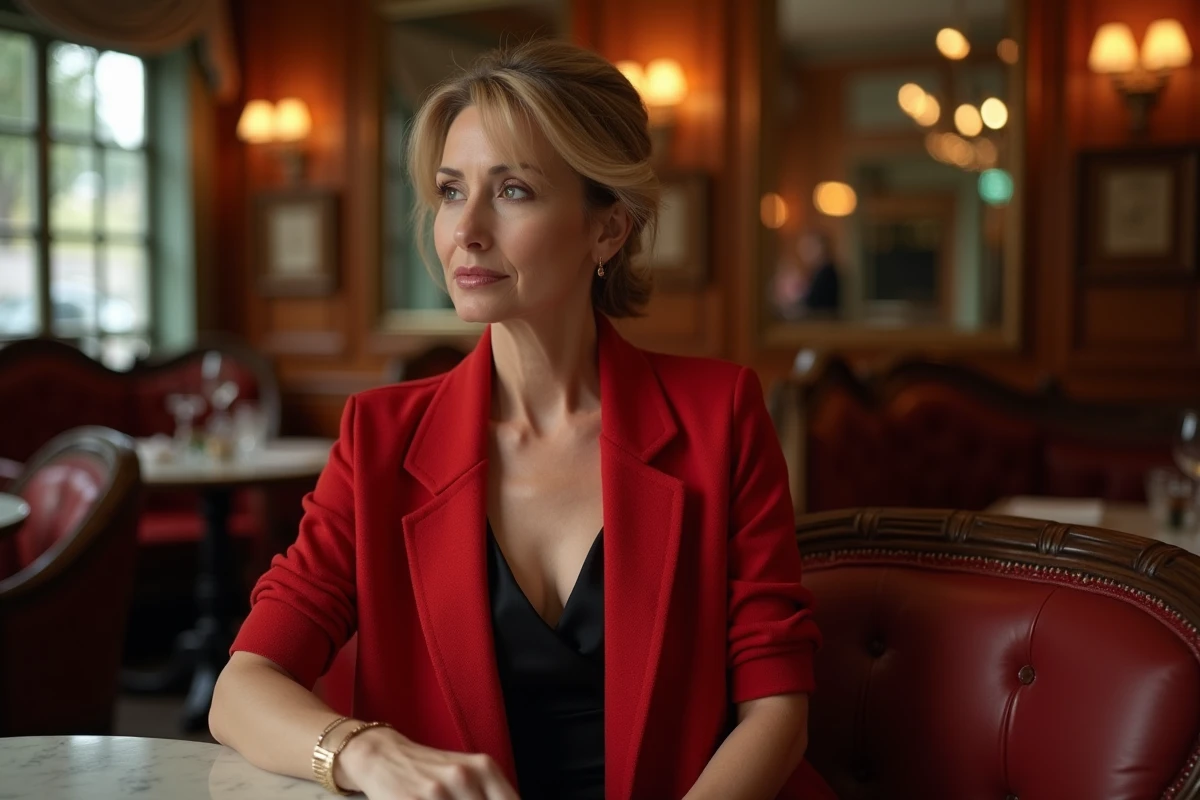
Light radically alters the perception of red. In the bright summer sun, a bright red can become almost fluorescent and can visually “overwhelm” a pastel or light dress. In yellow artificial light (restaurant, reception hall), the same bright red warms up and loses some of its aggressiveness.
Red shawl in summer
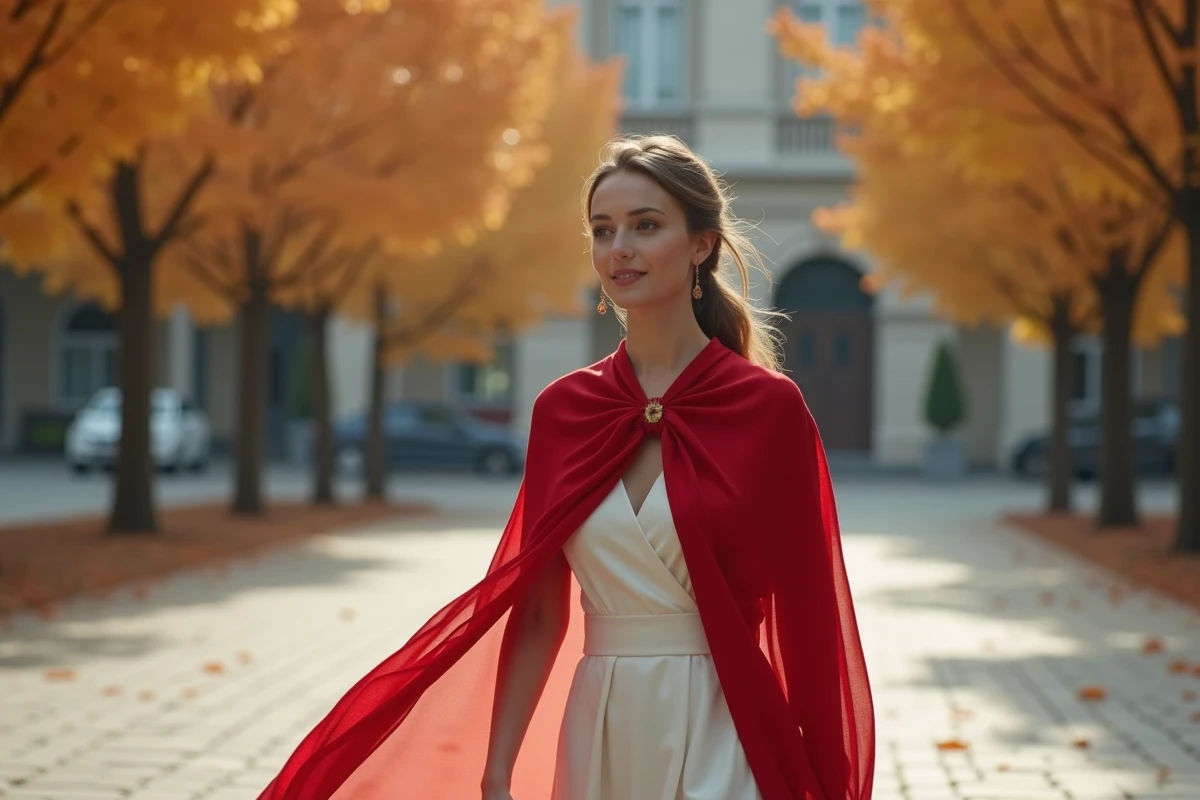
Warm weather calls for lightweight materials: silk, chiffon, or fine linen. A dark red silk shawl (burgundy, garnet) placed over a white or cream dress creates a sharp contrast without overwhelming. Very bright reds work better in the evening when the light dims.
Red shawl in autumn and winter
Denser materials like pashmina or cashmere add volume. A deep red, almost wine-colored, naturally fits into autumn palettes. Over a black dress, a burgundy pashmina structures the silhouette without cutting it off.
The basic rule: the stronger the ambient light, the duller or darker the red should be to avoid a garish effect. The softer the light, the more a bright red can afford to exist.
Red shawl and dress color: the combinations that work
A common mistake is to think of the red shawl in isolation. It is part of a whole that includes the dress, shoes, jewelry, and bag. Here are the most reliable combinations:
- Black dress: almost all reds work, from vermilion to burgundy. Black absorbs excess vibrancy and allows the shawl to play the role of the main color accent.
- White or ivory dress: favor a dark red (carmine, garnet) to avoid too harsh a contrast, or a soft orangey red for a more relaxed daytime effect.
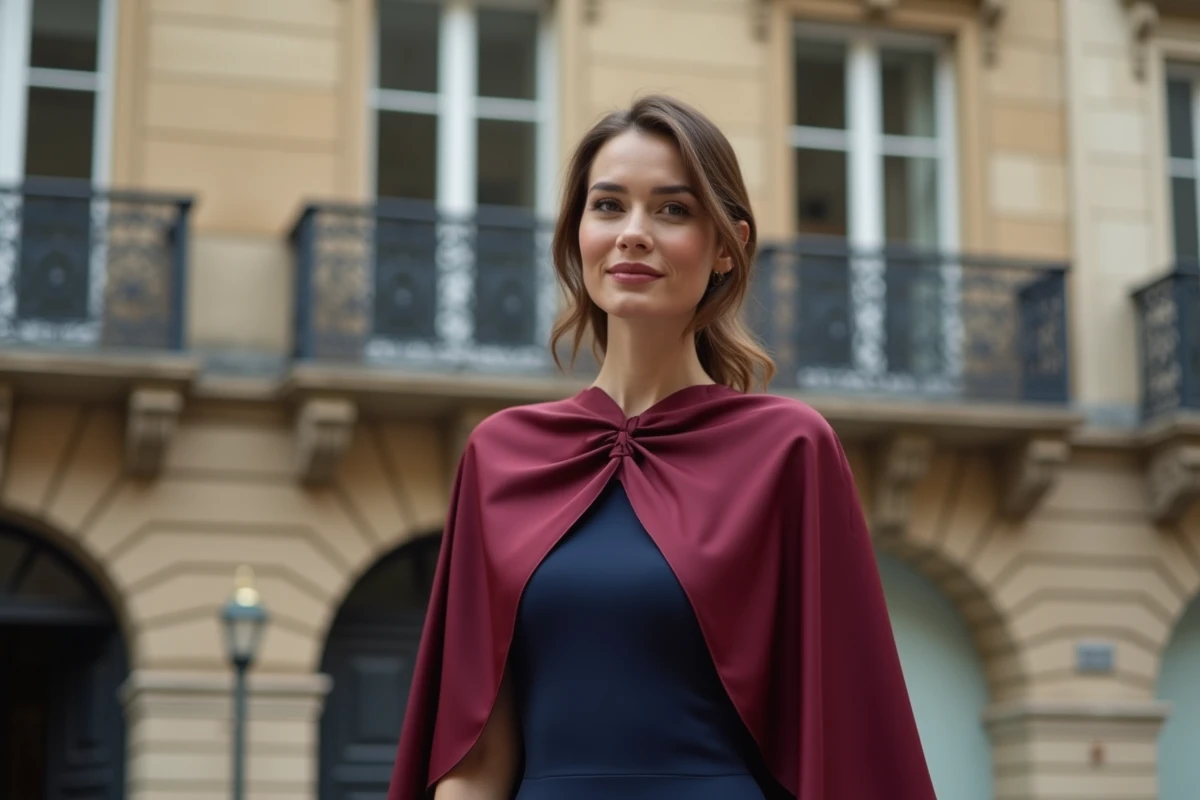
- Navy blue dress: red creates a classic combination inspired by nautical style. A bright red, neither too dark nor too orangey, produces the best result.
- Red dress: wearing a red shawl over a red dress requires a shift in shade. A total monochrome red look necessitates that the shawl be visibly lighter or darker than the dress to avoid a “block” effect.
With a dress in warm tones (yellow, coral, terracotta), red can create a chromatic overload. In this case, it’s better to opt for a shawl in a very desaturated red, almost old rose.
Wearing the red shawl according to the silhouette and cut of the dress
The way the shawl is draped alters the perceived proportions. This point is often overlooked in favor of just color choice.
On a long, flowing dress, a wide shawl worn draped over both arms further elongates the silhouette. On a short, fitted dress, the same shawl worn the same way can weigh down the lower body.
- Fitted and short dress: a fine shawl, worn asymmetrically over one shoulder, maintains the lightness of the outfit.
- Long flared dress: a medium-width shawl, draped symmetrically as a wrap, balances the volume at the bottom.
- Voluminous dress (petticoat, tulle): a narrow shawl worn close to the neck structures the upper body and avoids the “costume” effect.
For petite silhouettes, a shawl that is too long and falls below the hips visually cuts the line. Folding the shawl in half or tying it at chest height maintains harmonious proportions.
Consistency with accessories: jewelry, bag, and shoes
A red shawl draws the eye to the upper body. Jewelry worn nearby (earrings, necklace) should remain discreet to avoid visual competition.
Gold metals pair better with warm reds (vermilion, brick). Silver metals or platinum work with cool reds (raspberry, carmine). Choosing the metal based on the undertone of the red unifies the whole effortlessly.
For shoes and bags, black remains a safe bet. Nude lightens the outfit and is suitable for daytime events. Gold adds a festive dimension for evenings, provided that golden touches are not multiplied (one golden element is enough).
The red shawl serves as the focal point of an outfit. Other accessories accompany it without competing. A look where the shawl, earrings, bag, and shoes compete for intensity loses clarity and elegance.